
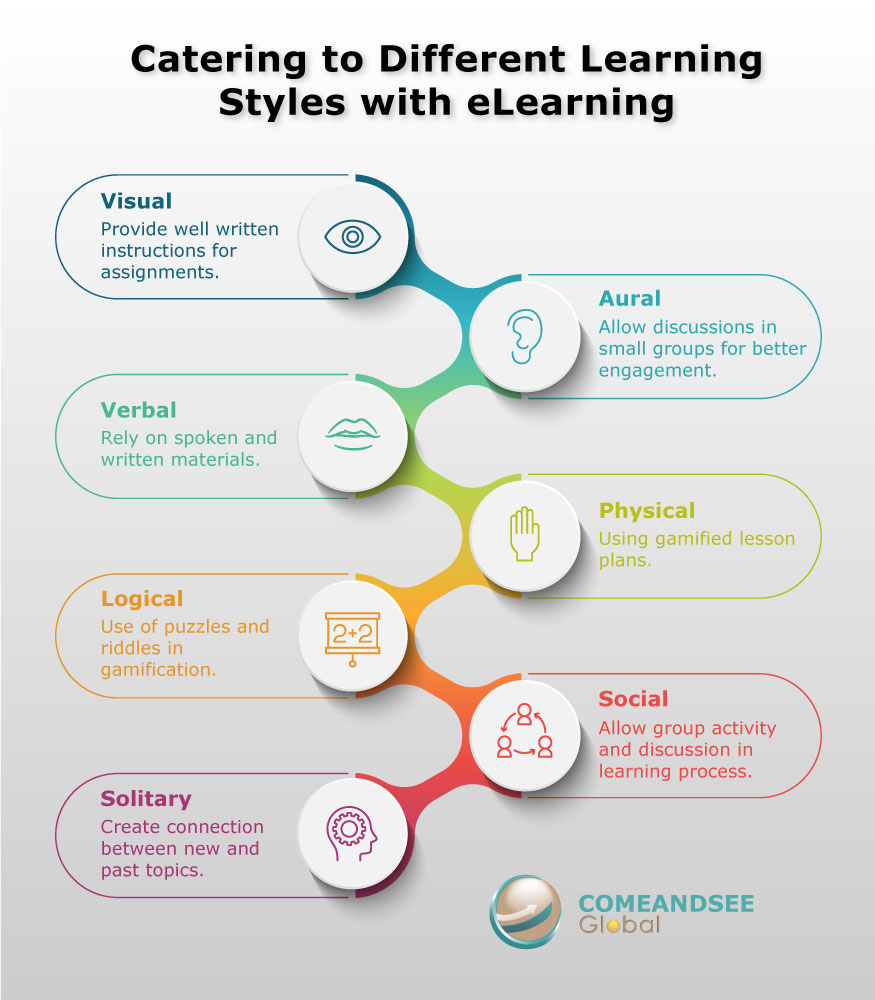
Faster and easier. These learning styles can be divided into the following types:
- Visual
- Aural
- Verbal
- Physical
- Logical
- Social
- Solitary
Research shows that each learning style involves using different parts of the brain and by engaging more areas of the brain during learning, we are able to remember more of what we learn. The use of brain imaging technologies has enabled researchers to pinpoint which areas of the brain are responsible for each learning style.
There are different techniques to engage the different learning styles.
For visual learners, the use of pictures, images and spatial understanding will engage the learners more. So in the lessons it is best to pair verbal instructions with visual cues to avoid confusion and have the best output.
Aural learners prefer using sounds, rhythms, music and other auditory elements in their learning to remeber things better and learn new things. Verbal repetition of learning objectives and use of engaging narration will be a good way to get their atte tion.
Verbal learners are learners that prefer to use words, both in speech and in writing. They are linguistic learners that can recall spoken information. Incorporating listening activities will prove to be useful when catering to a verbal learner.
Physical learners are the “learn by doing” people. By using gestures and relating teaching elements to certain real world scenarios, it will help improve their retention of the course.
Logical style learners prefer to use logic, reasoning and systems to solve problems. An effective way to appeal to these types of learners is by constructing a well organized course with proper linkage to the learning objectives with context-focused content.
Social learners are learners that enjoy learning in groups with other people. They will prefer to have social interaction with others as group discussion and direct involvement in lessons as they have a strong sense of intuition regarding the opinions of others.
While solitary learners prefer to learn alone through self-study. This learning type will strive on self-accomplishments and achievements which is why developing organised courses that award completion is a good way to cater to their needs.