
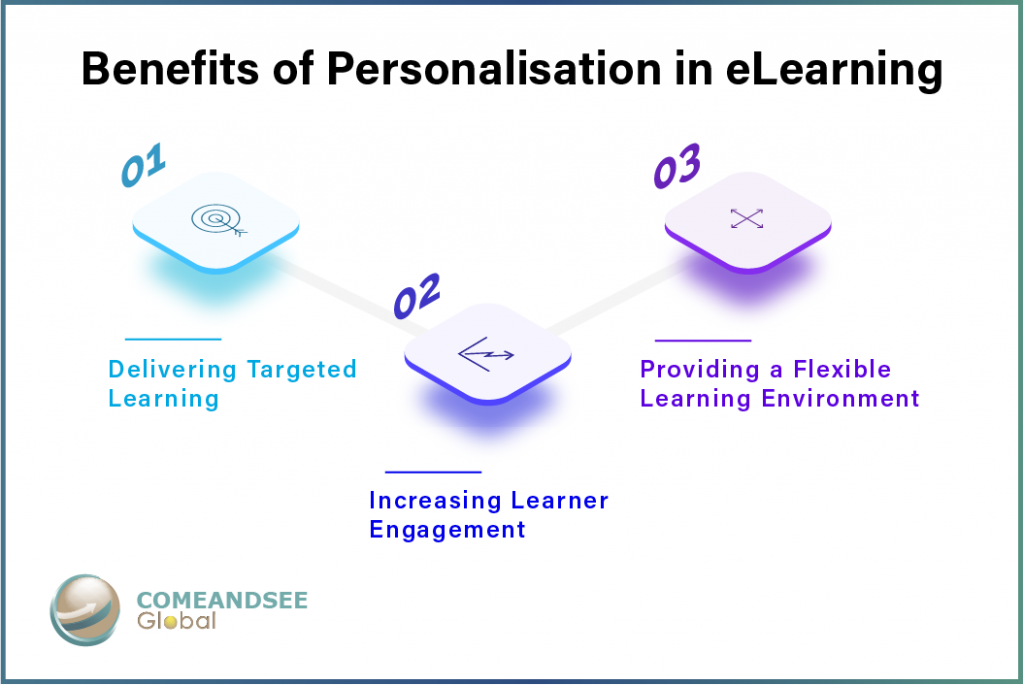
Personalized learning is an educational approach that aims to customize learning to each learner’s strength, skills and interests, often accompanied with a learning path that can cater to the learner’s unique needs. With the development in technology and advancements made in the online and digital learning platform, personalized learning can now be implemented more effectively. Some of the major advantages of personalised learning in e-Learning would be:
- The ability to deliver targeted learning
Personalised learning can help meet the needs of the learner much quicker compared to traditional learning. As adult learners, we prefer content to be relevant and to learn intentionally. By using a data driven approach, such as a pre-test to determine the learners’ role, needs, experiences and skill level, trainers can determine whether the learners are ready to attend advanced courses or if they are required to build a foundation of the knowledge firstly. This will help trainers make informed instructional and administrative decisions to better accommodate the learners.
- Increasing the learner’s engagement
In personalized learning, learners are given choices. Providing them the option to skip unrelated courses, and allowing them to customize their own learning space will give the learners a sense of proactivity in their learning. Simply by giving learners more control on their self-development, they can ignite their spark of learning and dedicate time and their full attention to it.
- Providing a flexible learning environment
Personalized learning provides great flexibility in many ways. By moving away from traditional time-sensitive learning paths, learners can structure for themselves the methods and resources that they feel are necessary to reach their own learning goal at their own pace, allowing them to take additional time, if needed, to master a certain course.
e-Learning providers can assist with this by presenting customized learning paths for their learners, to help fill the gaps in knowledge and escalate challenge.
Though it may seem to be an experimental approach to apply personalisation in learning, some higher education institutes have begun implementing different forms of personalisation in their curriculum. For example, we see many universities adopting the ‘flipped classroom’ approach where students are required to watch online lectures beforehand and use class time for questions and discussions with their lecturers and instructors. This was deemed a more effective use of face-to-face time in class where more meaningful group discussions can be held and more support can be given to students that require further explanation.
Personalized learning continues to gain prominence in eLearning design, and rightfully so as it is designed to meet the learning needs of each individual to give them the opportunity to discover their own interest in learning and help them achieve their own learning goal as efficiently as possible.