
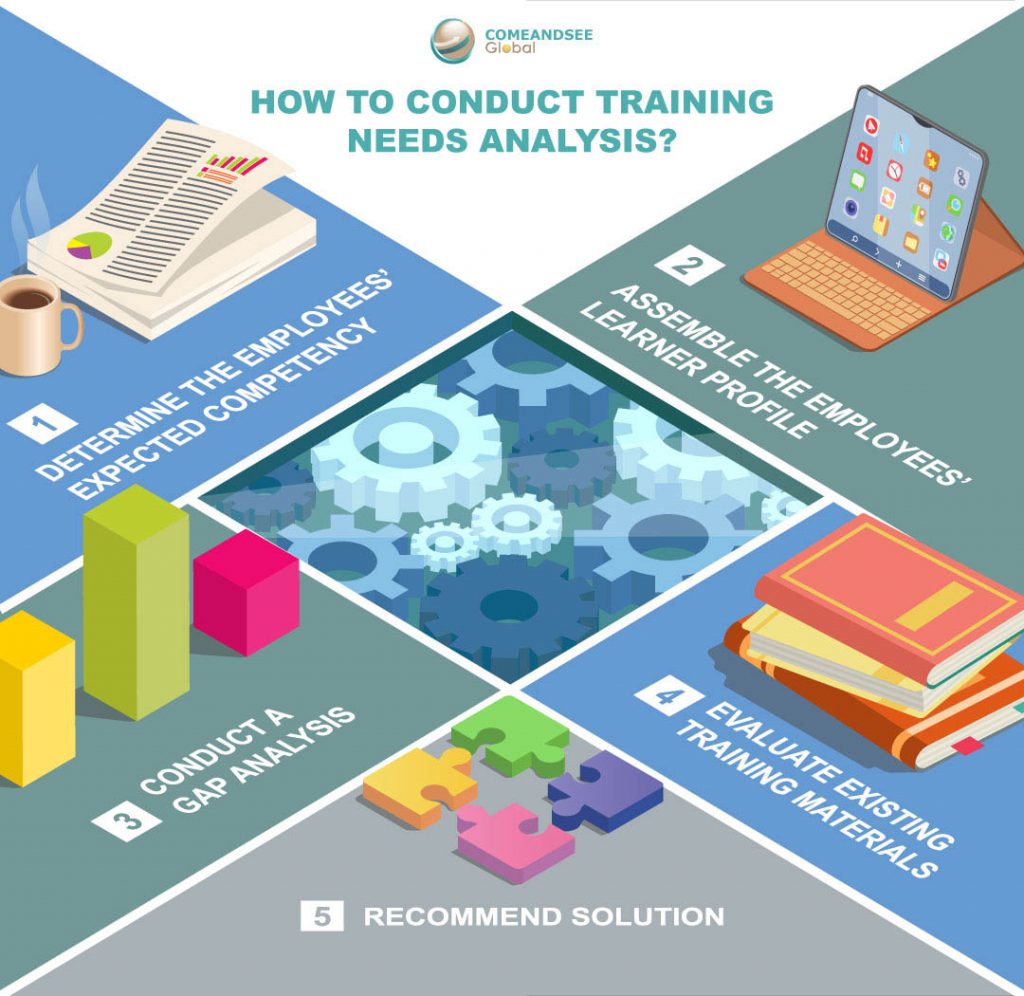
When designing a training course, it is important to determine what specific training the employees need. In order to know this, a training needs analysis is conducted. Below are some essential steps you should follow to ensure the productivity of the analysis:
- Step 1 – Determine the employees’ expected competency for the organisation
The first step is to analyse the organisation’s structure, short-term and long-term goals and future plans. You should also understand the roles and responsibilities for each job position, and the knowledge, skills and ability needed to execute their tasks. The course should ultimately improve the employees’ capabilities in helping the organisation achieve their targets. - Step 2 – Assemble the employees’ learner profile
The second step is to build the employees’ learner profile, such as their age and education level. This can be compiled through surveys, questionnaires, interviews, observations or conducting focus groups. You should determine their current level of knowledge and skill, and whether they are content with it, and also find out whether the current resources available to them are sufficient. - Step 3 – Conduct a gap analysis
The next step is to find the gap between the employees’ expected competency level and their actual performance, and identify the possible causes for it. This will determine whether a training course will be beneficial. It should also reveal the employees’ specific training needs, which will help in focusing the course content. - Step 4 –Evaluate existing training materials
Next, evaluate the previous training materials provided by the organisation. Were they effective? Why? If not, what improvisations could have been made to achieve the desired outcome? Other things to note include features of the training material, how engaged the subject matter experts (SME) were during development, and whether post-course assessments were conducted. - Step 5 – Recommend solutions
The final step is to provide training solutions to fill the gap (as previously identified), usually in the form of a detailed report. You can include an outline of the course content and its scope, finalise the authoring tool and level of interactivity, estimate timelines and delivery schedule, list stakeholders and SMEs, and how to assess the employees’ performance level after the training course.