
The most important thing in your eLearning course is, without a doubt, the quality of your content. Even if you had a course that was engaging and well-designed, if the content does not successfully encompass the learning objectives, then it would have failed in its primary purpose.
While the content is usually provided by the subject matter expert, there are definitely times when you would need to verify the information or do some research for additional content yourself. With the abundance of sources available, it may be hard to discern high-quality data from substandard or illegitimate sources. Therefore, it is important that you know how to look for your content and how to use them in your course.
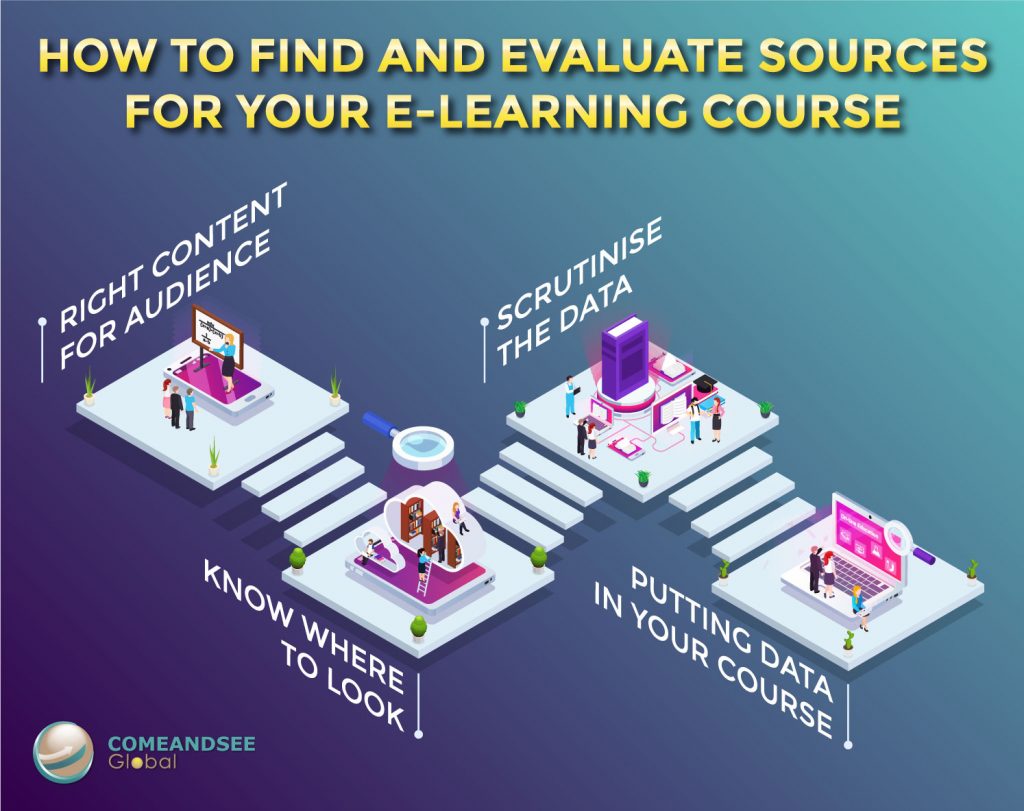
- Step 1 – The Right Content for the Audience
The first thing to do is to know what specific information is required. Having a reference point is crucial before you go out to explore so you don’t waste time collecting information you aren’t going to end up using or is irrelevant to your course. Keep track of your desired learning outcomes, and consider whether the information enhances understanding of the course or would just distract learners.
- Step 2 – Knowing Where to Look
Once you know what you’re looking for, it’s time to figure out where to look. While skimming through Google’s search results is easily many people’s first go-to method, there may be sources that you haven’t thought of delving into. For example, try looking into open access journals, as well as data collected by government agencies. This list by Column Five Media shows over a hundred free data sources from reputable organisations all over the world: https://www.columnfivemedia.com/100-best-free-data-sources-infographic
- Step 3 – Scrutinise the Data
Now that you have found your information, it is important that you scrutinise it. Where did they get their information? Was it from a legitimate study, or do they just believe it to be true with no basis in research? Consider who wrote it – those with an agenda might try to skew information to one opinion over another, manipulating how the data might be read. How old is the data? Trends can change quickly over time, and what was true before may no longer be relevant now.
- Step 4 – Putting the Data in Your Course
It is important that you credit your sources in your eLearning to give credibility to the information, and to avoid accusations of plagiarism. Different eLearning designers have their own methods for including sources and citations – while some create a dedicated slide for all their sources, others may just put the information at the bottom of each relevant page. Generally, if the source is from a website, you should include the link to the website page. Authors/organisations and publishing years are also important for studies and surveys. You might also consider adopting proper citation formats such as APA and MLA.
By following these steps, you should be able to build the groundwork for your course, and create a learning experience that is authentic and meaningful.