
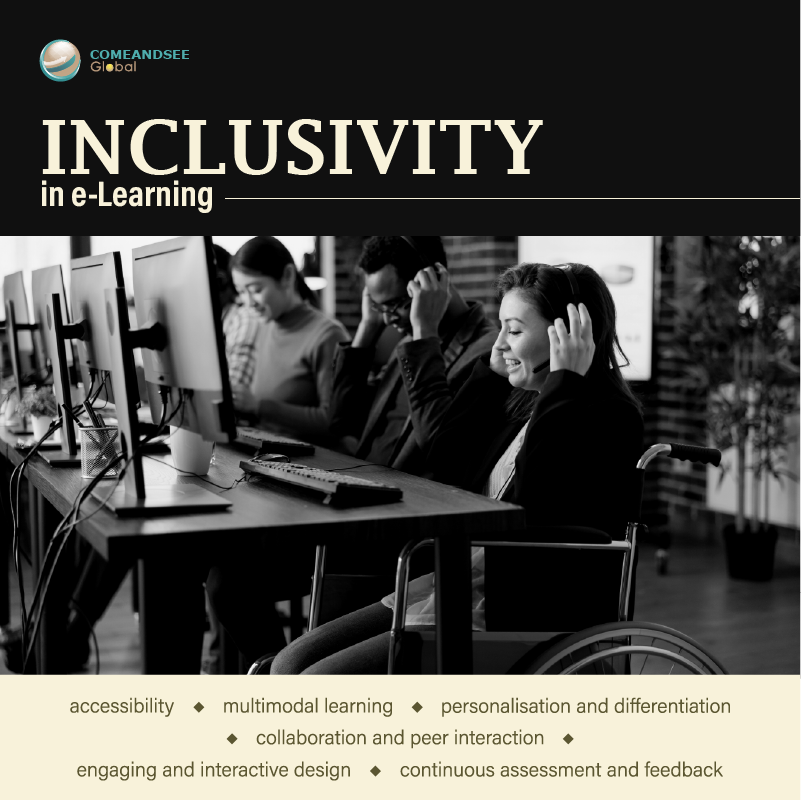
Inclusive e-learning is a critical approach that recognizes the diverse needs and circumstances of learners. It aims to provide equal opportunities for all individuals, including those with disabilities. The World Health Organization (WHO) reports that approximately 1.3 billion people, accounting for around 16% of the global population, experience significant disabilities.
This highlights the importance of inclusive practices in online education, ensuring accessibility and accommodating diverse abilities. Additionally, WHO further highlights the prevalence of vision impairment, affecting over 2.2 billion people worldwide. By integrating inclusive e-learning strategies, we can address these challenges, promote equal participation, and create a more inclusive and accessible online learning environment for all learners, regardless of their abilities or circumstances. The following are key aspects of inclusive e-learning:
- Accessibility: Ensuring that e-learning platforms, content, and materials are accessible to learners with disabilities, accommodating different learning styles, and utilizing assistive technologies. For example, for hearing impaired learners, it would be best to use audio content with visual captions.
- Multimodal Learning: Incorporating a variety of multimedia elements, such as videos, images, interactive simulations, and audio recordings, supports inclusive e-learning. By providing information through different sensory channels, learners with different learning styles can engage with the content in ways that suit them best.
- Personalization and Differentiation: Personalized learning paths and differentiated instruction allow learners to progress at their own pace, explore topics of interest, and receive tailored support. Adaptive learning technologies can assist in delivering personalized learning experiences.
- Collaboration and Peer Interaction: Creating opportunities for collaboration and peer interaction is crucial for inclusive e-learning. Group projects, discussion forums, virtual classrooms, and interactive activities facilitate engagement and social interaction among learners, promoting the exchange of ideas and perspectives.
- Engaging and Interactive Design: Inclusive e-learning employs interactive and engaging instructional design strategies. Gamification elements, simulations, quizzes, and multimedia presentations enhance learner engagement and motivation. The use of clear and concise language, visual aids, and interactive exercises can also help learners with diverse language abilities and communication styles.
- Continuous Assessment and Feedback: Regular and constructive feedback is essential to support inclusive e-learning. Assessments should be designed to accommodate different learning styles and abilities. Providing timely feedback helps learners track their progress, identify areas for improvement, and receive the necessary support to succeed.
By incorporating these principles of inclusivity into e-learning design and delivery, educational institutions and online platforms can create a learning environment that respects and supports the diverse needs, abilities, and backgrounds of learners, fostering inclusive education and ensuring equitable opportunities for all.